Flushing and disinfecting a drinking water installation
Flush first, then, if needed, disinfect. For new installations and after repairs, flushing with water is often enough. Only if this does not achieve the required drinking water quality is disinfection added. This is set out in the code of practice of the Central Association for Sanitary, Heating and Air Conditioning (ZVSHK). The technical rules for disinfection are set out in DVGW W 551-3 for drinking water installations and in DVGW W 291 for water supply systems.
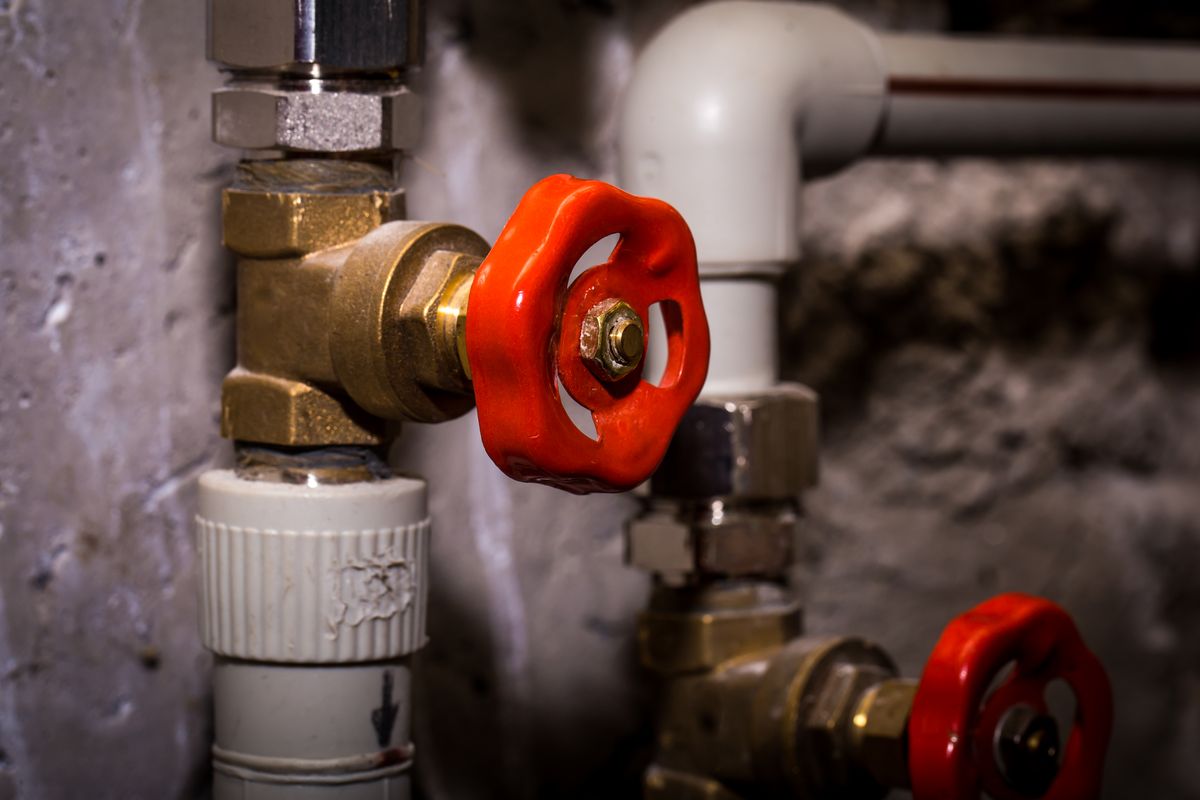
When to flush, when to disinfect?
Contaminants enter the system above all during new installations and repair work; the greatest risk here is contamination with pathogens. The ZVSHK code of practice therefore provides for flushing first. No stagnation periods should occur between flushing and commissioning, so that bacteria cannot multiply.
Disinfection can become necessary in the event of microbial contamination, as the DVGW describes it. Since 2023, the technical action value under Annex 3 of the Drinking Water Ordinance and the duties under Section 51 have applied to Legionella. If the condition of the drinking water installation is the cause, disinfection there may, under Section 23(3), only take place on the order of the health authority, and the operator must remediate the installation.
Which rules apply?
| Code of practice | Subject |
|---|---|
| DVGW W 551-3 (2022-08) | Cleaning and disinfection of drinking water installations, including non-stationary systems; replaces W 557 unchanged |
| DVGW W 291 (2021-12) | Cleaning and disinfection of water supply systems, that is, the distribution network upstream of the drinking water installation |
| DVGW W 551-2 (2022-08) | Hygienic-microbial abnormalities in the drinking water installation: method and measures |
| ZVSHK code of practice (2014) | Flushing, disinfecting and commissioning drinking water installations |
| DIN EN 806-4 (2010-06) | Installation; Section 6 on filling, pressure testing and flushing |
| VDI 6023 Part 1 | Hygiene in drinking water installations: planning, execution, operation and maintenance |
How does chemical system disinfection work?
- Clarify the trigger and scope. A test result or a repair shows which part of the system is affected. For Legionella, this includes investigating the cause and a risk assessment under Section 51 TrinkwV.
- Clean and flush. Deposits and soiling must be removed first; Guideline No. 5 for ships explicitly makes mechanical cleaning before a system disinfection obligatory.
- Introduce the disinfectant. The DVGW rules name hydrogen peroxide, sodium hypochlorite and chlorine dioxide as proven chemicals. Concentration and application follow the manufacturer's instructions.
- Allow it to act. According to the DVGW, the required contact times can, based on experience, be up to 24 hours.
- Flush thoroughly. After system disinfection, thorough flushing is required to rinse out any remaining disinfectant.
- Check the result. A microbiological test by an accredited laboratory shows whether the system again delivers flawless drinking water.
How does thermal disinfection work?
In thermal disinfection, the hot water is heated so that at least 70°C is present at every hot-water outlet, with the outlet fully open, for at least 3 minutes. Times and temperatures must be measured and documented. This is how the Bavarian State Office for Health and Food Safety (LGL Bayern) and health authorities describe it, drawing on DVGW W 551 and W 551-3. This method does not cover the cold water.
What must be done after a longer period of stagnation?
If water stands in the pipes for a long time, germs multiply more easily. VDI 6023 Part 1 requires regular water exchange at all outlets; specialist publications on the guideline give a limit of 72 hours for this, after which the lack of exchange counts as an interruption in operation. Flushing takes place before recommissioning; if a test shows contamination, disinfection follows.
The same principles apply to mobile and temporary systems. The DVGW guidance for funfairs requires flushing the hydrant and standpipe for at least 5, preferably 10 minutes, and flushing all pipes every morning. The instructions for water tanks and drinking water hoses show the procedure in detail.
Frequently asked questions on flushing and disinfection
Must a new drinking water installation be disinfected?
Not as a rule. Under the ZVSHK code of practice, a new installation is flushed first. Only if flushing with water does not achieve the drinking water quality required for commissioning are disinfection methods additionally used.
Which disinfectants are used for system disinfection?
DVGW codes of practice W 291 and W 551-3 name hydrogen peroxide, sodium hypochlorite and chlorine dioxide as proven disinfection chemicals, and W 291 additionally names calcium hypochlorite. Application follows the manufacturer's instructions.
Who may carry out system disinfection?
DVGW code of practice W 557, now W 551-3, is aimed at planners, installers, operators, authorities and specialist contractors. For drinking water supply at funfairs, the DVGW guidance explicitly requires a specialist firm to carry out the system disinfection. You can disinfect your own water tank in a motorhome or boat yourself, using a set of instructions.
How long must the disinfectant act?
This depends on the product and the concentration. The DVGW states that, based on experience, the required contact times can be up to 24 hours. For biostream® ZERO, the dosing instructions give the contact time for each level.
Sources
- ZVSHK: flushing, disinfecting and commissioning drinking water installations (sample extract, in German)
- DVGW W 551-3 (in German) and the W 551 series (in German)
- DVGW twin No. 05: disinfection of drinking water installations (2009, in German)
- DVGW twin No. 15: drinking water supply at funfairs (June 2026, in German)
- DVGW: disinfection in the drinking water installation (in German)
- LGL Bayern: Legionella (in German)
- VDI 6023 Part 1 (in German)
This page does not replace specialist planning or guidance from the health authority. Work on a building's drinking water installation belongs in the hands of a specialist firm.